Our story
We have been answering that letter ever since.
1998
The question
So when I was twelve and a teacher asked our class how the world could be changed, my answer was immediate: with education, of course.
Years later, living in New York, I volunteered with education programs across the city, studied everything I could about how children learn, and ran Bolivian Express, the magazine I co-founded. When that chapter closed, I knew what I wanted: not to join something, but to create something. In Bolivia. For Bolivia.

Obrajes, 2015
The first door
Zera began in 2013 in a small office in La Paz. In March 2015 we taught our first course inside the women's prison of Obrajes, with thirteen children who lived there with their mothers. For months, my volunteer friends and I carried everything in ourselves: the projector, the materials, food, games, art supplies. We wanted to build them an oasis inside those walls. What we did not expect was how much they would teach us.
One afternoon we made collages. Each child chose images of what they longed for, the tangible and the intangible. The tangible pages filled up with airplanes, cars, school supplies, flowers, toys. For the intangible, they wrote words: happiness, joy, adventure. And on page after page, one word kept returning: safety. Children should not have to long for safety. These children did.
Then a boy of ten showed me his collage. An airplane. A soccer player. And in the space for the intangible, one word: tears. I thought he had misunderstood the exercise, so I asked him why. He knew exactly what he was doing. "Because tears are part of life," he said.
He was ten, and he was right. That is how children think when someone takes them seriously. Our whole pedagogy lives inside his answer: an education that does not deny what is hard, and does not surrender to it either.
When the course ended, the mothers wrote us a letter asking us to return and teach the next stage. That letter is our true founding document. Not a needs assessment. Not a diagnosis of damage. Mothers, in the hardest of circumstances, demanding more learning for their children. We have been answering that letter ever since.
That letter is our true founding document. Not a needs assessment. Not a diagnosis of damage.The mothers of Obrajes
2016 to 2020
The state says yes
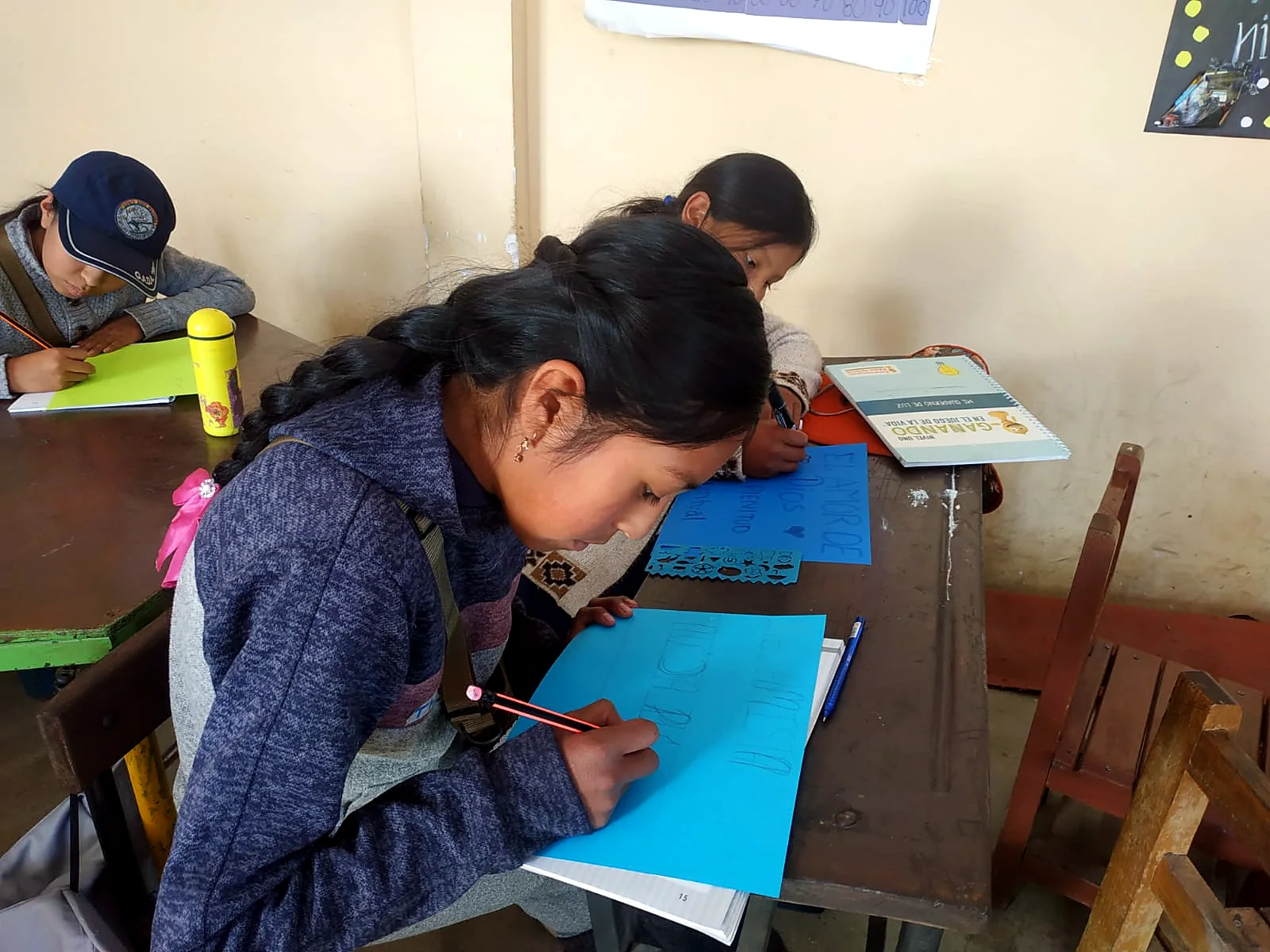
Municipal facilitators in La Paz carried the program farther. Bolivia's Ministry of Education thanked Zera for the work. At its peak, Zera reached sixteen prisons where children lived with their mothers and the entire national children's hospital network. Laminated workbooks could be cleaned and used again beside a hospital bed. By then, 12,700 children had been reached across all nine departments.
The turn
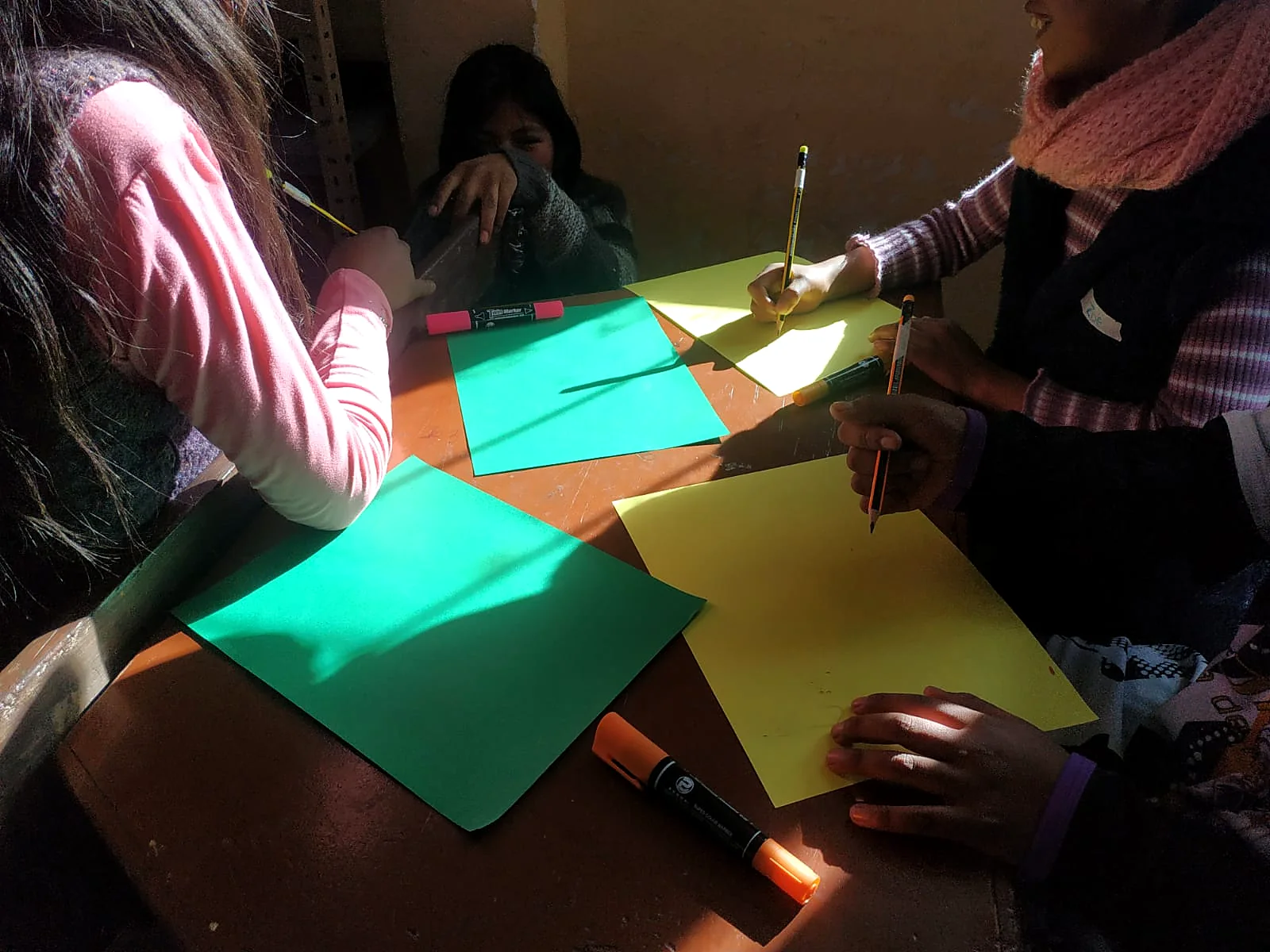
When governments changed, those programs stopped. We left the materials so anyone could continue. In Bolivia, institutions do not hold. People do. So we redesigned: today Zera trains rural authorities, young leaders from El Alto, teachers, and cultural centers, who go home and become facilitators in their own towns. The program lives in people, not permits.
Today
The redesign
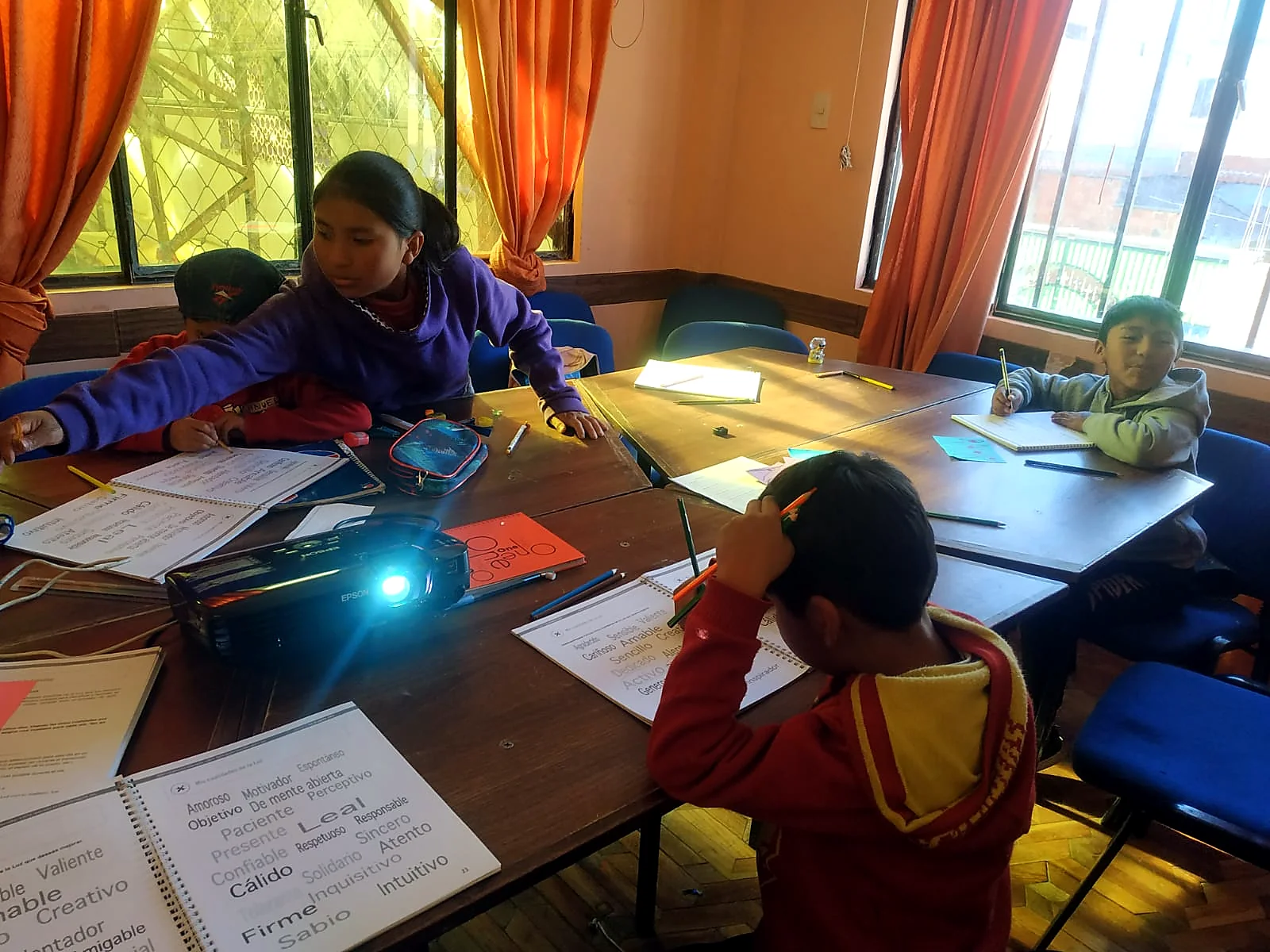
Training now travels through rural authorities, young leaders from El Alto, teachers, and cultural centers. Zera covers transport, materials, food, and celebration so learning can happen. TikTok, Instagram, and WhatsApp turn public education into another classroom and keep the tools moving.
Warisata
The ground
In 1931, in an ayllu called Warisata on the Bolivian altiplano, an Aymara educator named Avelino Siñani built a school with Elizardo Pérez that was not supposed to be possible. The community governed it. Elders and parents sat in its council. Children learned by building, planting, and deciding. It was education as self-actualization, and it was so powerful that the landowning class had it dismantled within a decade. Today, Bolivia's national education law carries his name.
I carry his surname. I cannot claim his bloodline, and I do not need to. Siñani is my mythical ancestor: proof, written into my own name, that Aymara people have always built world-class education on their own terms.
My first privilege was not money. It was a house with teachers in it. My uncle and my aunt taught primary and secondary school, and I grew up inside their teaching stories, surrounded by their books. From them I absorbed the conviction that has organized my life: learning is possible. You can learn anything.
Zera is the Hebrew word for seed. But zera means more than the seed: it is also the fruit, the beginning and the outcome, the whole living cycle. That is what education is. In the Andes we say qhip nayra: we walk forward with the past before our eyes. Learning is not a circle that repeats. It is a spiral. Each turn, the same ground, a higher level.
That spiral has reached more than 12,700 children across Bolivia's nine departments. At the program's peak, it reached the national children's hospital network and sixteen prisons. The ancestors built Warisata. We honor them by going farther.
Sembradores
What comes next
One hundred Sembradores can sustain one hundred trajectories and the people who will carry the program into the next communities. One child, one facilitator, one seed planted again.
Become a Sembrador